Clinical Research is a Multinational, Multibillion, Multidisciplinary Industry
What is Clinical Research?Clinical Research is a systematic study for new drugs in human subjects to generate data for discovering or verifying the Clinical, Pharmacological (including pharmacodynamic and pharmacokinetic) or adverse effects with the objective of determining safety and efficacy of the new drug.
Clinical Research is Conducted in 4 Phases
Phase I trialsThis is the first time the new drug is administered to a small number, around 20-80 healthy, informed volunteers under the close supervision of a doctor. The purpose is to determine whether the new compound is tolerated by the patient’s body and behaves in the predicted way.
Phase II trialsIn this phase, the medicine is administered to a group of approximately 100-300 informed patients to determine its effect and also to check for any unacceptable side effects.
Phase III trialsIn this phase, the group is between 1000 and 5000, for the company to use statistics to analyze the results. If the results are favourable, the data is presented to the licensing authorities for a commercial licence.
Phase IV trialsThis is a surveillance operation phase after the medicine is made available to doctors, who start prescribing it. The effects are monitored on thousands of patients to help identify any unforeseen side effects.
Thursday, July 30, 2009

10 Reasons To Trade in Forex
You are probably wondering why should you consider investing your time and energy in FOREX? There are many benefits in this market and i has chosen top 10 reasons why so many people go for it:
1. No hidden fees or commissionsAren't you exhausted of all these "pay upfront" deals? Almost everywhere you have to pay to join, pay to be trained, pay to make a transaction. There is no commission fee, exchange fee or trading fee. What about the broker? Your broker makes their money by taking the difference in price between the ask price and bid price for the currency being traded. In short, you won't be asked a penny for any FOREX services.
2. No middlemen
Forex doesn't have and doesn't need middlemen, unlike for example equity exchanges. This gives you opportunity to access market maker directly. In simple words, you buy or sell directly from the entity that has put a price on a certain currency pair and, therefore, gain a quick access to trades.
3. A 24-hour market
You won't have to set an alarm to wake up early in the morning or drink 10 cups of black coffee to stay awake at night. Forex market is as flexible as it gets and welcomes traders from all over the world at any time of the day! You choose the trading hours – morning, noon or night!
4. Much less complicated then stocks
There are tones of stocks available for trading and it is difficult to keep up with the updates, read up the news and perform the analysis before each new trade. Unlike stocks, Forex market is much less demanding. You have access to many different currencies, but generally FOREx focuses on the four major currency pairs. That means less time wasting on research and much faster entrance to the market itself.
5. Leverage
Not long ago only the owners of million dollars account could participate in currency exchange. Today due to expended international growth FOREX became available to anyone from the comfort of your own home. Every individual including you have the same leverage guarantees that were available only to international banks back then. What does it mean? In simple words, a small margin deposit can control a much larger total contract value. Leverage provides each trader with a chance to profit with a minimum capital risk. For example, let's say that your broker offers 200 to 1 leverage, meaning a $20 dollar margin deposit enables you to buy or sell $20,000 worth of currencies. What about bigger deposits? In a similar fashion, $200 dollars can be used to hold $200,000 worth of another currency
6. High LiquidityThe daily turnover in Forex Market reaches 2 trillion dollars. Let me picture this for you: 2,000,000,000,000!! Forex is an enormous market and it never stays still. Almost every country in the world has institutional and individual traders who are active and have a personal interest in this largest of commodities. That's where the liquidity comes from. Buying and selling is done by a simple click of a mouse.
7. Practice makes perfect
Almost all online Forex brokers offer demo account, easily to download and install, to practice your skills. You won't have to deposit anything. The demo account works exactly like the real account with all capabilities and information. For example, with your free demo account you have an access to breaking forex news and charting services, buy and sell capabilities and realistic "play" money account with active profit and loss. This is a perfect way to master your trading skills and tactics with virtual money before becoming a real thing and opening a live trading account.
8. Free software
Forex software offered by the brokers is specifically designed for the average home computer. The software provides the trader with real-time charting, lots of indicators, live price feed and ability to sell and buy currency pairs immediately online. There is also an option to upgrade the software program for an additional cost to get an access to advanced features, but it is more then unnecessary for a beginner. Start small, think big!
9. Small deposits are allowed
Don't blame yourself for not marrying a milliner's daughter or a Saudi Arabian prince yet. You don't need tons of money to start as a currency trader. Unlike trading stocks, online forex brokers have "mini" and "micro" account options with a minimum account deposit of 250$ and lower, which makes Forex accessible to almost anyone! You might wonder what can possibly come out of $250. With proper training and patience within several months a minimal investment can turn into a $25,000 account.
10. Limit your risk with Forex
FOREX platforms are designed to automatically assign a margin call if the margin amount required by your account exceeds the actual capital available in your account. In simple words, the most you can possibly lose is the money you have got in your account and no penny more. You cannot get into minus and trade amount not available in your account.
Over all, Foreign Currency Exchange markets have become a profitable hobby and satisfying lifestyle for many individual investors. Forex is fun, user-friendly and lucrative market available to anyone of us.
1. No hidden fees or commissionsAren't you exhausted of all these "pay upfront" deals? Almost everywhere you have to pay to join, pay to be trained, pay to make a transaction. There is no commission fee, exchange fee or trading fee. What about the broker? Your broker makes their money by taking the difference in price between the ask price and bid price for the currency being traded. In short, you won't be asked a penny for any FOREX services.
2. No middlemen
Forex doesn't have and doesn't need middlemen, unlike for example equity exchanges. This gives you opportunity to access market maker directly. In simple words, you buy or sell directly from the entity that has put a price on a certain currency pair and, therefore, gain a quick access to trades.
3. A 24-hour market
You won't have to set an alarm to wake up early in the morning or drink 10 cups of black coffee to stay awake at night. Forex market is as flexible as it gets and welcomes traders from all over the world at any time of the day! You choose the trading hours – morning, noon or night!
4. Much less complicated then stocks
There are tones of stocks available for trading and it is difficult to keep up with the updates, read up the news and perform the analysis before each new trade. Unlike stocks, Forex market is much less demanding. You have access to many different currencies, but generally FOREx focuses on the four major currency pairs. That means less time wasting on research and much faster entrance to the market itself.
5. Leverage
Not long ago only the owners of million dollars account could participate in currency exchange. Today due to expended international growth FOREX became available to anyone from the comfort of your own home. Every individual including you have the same leverage guarantees that were available only to international banks back then. What does it mean? In simple words, a small margin deposit can control a much larger total contract value. Leverage provides each trader with a chance to profit with a minimum capital risk. For example, let's say that your broker offers 200 to 1 leverage, meaning a $20 dollar margin deposit enables you to buy or sell $20,000 worth of currencies. What about bigger deposits? In a similar fashion, $200 dollars can be used to hold $200,000 worth of another currency
6. High LiquidityThe daily turnover in Forex Market reaches 2 trillion dollars. Let me picture this for you: 2,000,000,000,000!! Forex is an enormous market and it never stays still. Almost every country in the world has institutional and individual traders who are active and have a personal interest in this largest of commodities. That's where the liquidity comes from. Buying and selling is done by a simple click of a mouse.
7. Practice makes perfect
Almost all online Forex brokers offer demo account, easily to download and install, to practice your skills. You won't have to deposit anything. The demo account works exactly like the real account with all capabilities and information. For example, with your free demo account you have an access to breaking forex news and charting services, buy and sell capabilities and realistic "play" money account with active profit and loss. This is a perfect way to master your trading skills and tactics with virtual money before becoming a real thing and opening a live trading account.
8. Free software
Forex software offered by the brokers is specifically designed for the average home computer. The software provides the trader with real-time charting, lots of indicators, live price feed and ability to sell and buy currency pairs immediately online. There is also an option to upgrade the software program for an additional cost to get an access to advanced features, but it is more then unnecessary for a beginner. Start small, think big!
9. Small deposits are allowed
Don't blame yourself for not marrying a milliner's daughter or a Saudi Arabian prince yet. You don't need tons of money to start as a currency trader. Unlike trading stocks, online forex brokers have "mini" and "micro" account options with a minimum account deposit of 250$ and lower, which makes Forex accessible to almost anyone! You might wonder what can possibly come out of $250. With proper training and patience within several months a minimal investment can turn into a $25,000 account.
10. Limit your risk with Forex
FOREX platforms are designed to automatically assign a margin call if the margin amount required by your account exceeds the actual capital available in your account. In simple words, the most you can possibly lose is the money you have got in your account and no penny more. You cannot get into minus and trade amount not available in your account.
Over all, Foreign Currency Exchange markets have become a profitable hobby and satisfying lifestyle for many individual investors. Forex is fun, user-friendly and lucrative market available to anyone of us.
Monday, July 13, 2009
Mars rover devours budgets
Ever-growing cost of the planned Mars Science Laboratory threatens other space missions.
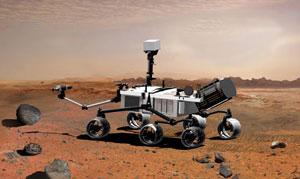 Cost estimates for the Mars Science Laboratory have risen again.NASA
The Mars Science Laboratory (MSL), NASA's souped-up 1-tonne rover due for launch in 2011, needs yet more money. The latest budget overrun could for the first time delay other missions in the agency's cash-strapped planetary-science division.
The rover's latest price tag is US$2.286 billion — 40% more than the official $1.63-billion estimate made in 2006. But even that will not be enough. In a 'breach report' due to be handed to the US Congress by the end of July, NASA will report that the troublesome mission, now also called Curiosity, needs $15–115 million more on top of the $2.286-billion estimate.
NASA has so far avoided delays and cancellations to other missions by raiding technology-development funds within the Mars programme. But officials are now considering delays to two planned Moon missions.
"The time for some tough decisions is here," said NASA science chief Ed Weiler. He broke the news to planetary scientists at an advisory-committee meeting on 9 July at NASA headquarters in Washington DC, along with Jim Green, director of the planetary science division, and Mars programme chief Doug McCuistion.
Slippery issue
The cause of the latest overrun is problems with motors, gearboxes and avionics controls. After switching from a dry to a wet lubricant, engineers have had trouble verifying the reliability of motors for the rover's robotic arm. Moreover, McCuistion says, a new snag was recently discovered: some of the premier instruments — the Sample Analysis at Mars or SAM instrument set — will suck twice as much power as was expected, and that means the rover needs to carry bigger batteries.
“Where's it going to end?”
Clive Neal
University of Notre Dame
McCuistion says he won't have confidence in the estimates for the rover's latest needs until November, when an independent cost estimate is finished. If the additional costs stay towards the $15-million end of the spectrum, McCuistion and Green think they can keep the pain within the Mars programme, by cutting money for later Mars missions in 2016, 2018 and 2020.
But if the extra costs rise toward $115 million, the agency may have to delay the Lunar Atmosphere and Dust Environment Explorer, a small orbiter due to be launched in 2012, and the International Lunar Network, a planned system of robotic lunar research stations. The agency could also delay work on New Frontiers, a planned $870-million programme of missions to many Solar-System destinations that has just begun accepting competitive proposals.
"Where's it going to end?" asks Clive Neal, a planetary scientist at the University of Notre Dame in Indiana and chair of NASA's Lunar Exploration Analysis Group. "Everything is getting sick because of one mission. And I'm not happy with that."
Too big to fail?
Like many bloated scientific endeavours, however, the MSL may be too big to fail. In January, after NASA decided to delay the rover's launch from 2009 to 2011, the planetary-science advisory committee was presented with a shocking, but presumed final, $400-million overrun. The committee recommended that NASA press ahead with the mission and try to limit cuts to the Mars programme.
At the Jet Propulsion Laboratory in Pasadena, California, the project manager, Richard Cook, was replaced by Peter Theisinger, a former project manager for the Mars rovers Spirit and Opportunity. McCuistion says he will order an independent "lessons learned" investigation in 2010.
By then the extent of the damage to NASA's long-term plans may be known. Weiler says that it looks like the agency may not be able to be able to afford a 2020 launch of a major mission to Jupiter's moon Europa. With Mars technology budgets decimated, a Mars Sample Return mission is moving even further down the schedule. Such a mission, which would cost $6–8 billion, isn't likely to start until around 2024, says Weiler.
Obesity links found between mothers and daughters, fathers and sons
Scientists have found a strong obesity link between mothers and daughters and fathers and sons, but the link was absent across the gender divide.
In a study of 226 families by Plymouth's Peninsula Medical School, researchers found that obese mothers were 10 times more likely to have obese daughters and for fathers and sons, there was a six-fold rise.
But in both cases children of the opposite sex were not affected.
According to the researchers, it was "highly unlikely" that genetics was playing a role in the findings, as it would be unusual for them to influence children along gender lines.
On the other hand, they attributed the link to some form of "behavioural sympathy" where daughters copied the lifestyles of their mothers, and sons copied the lifestyles of their fathers.
And, thus, experts believe that the government policy on tackling obesity should be re-thought.
To date, researchers have focussed on younger age groups in the belief that obese children become obese adults.
But the new findings indicate that obese adults led to obese children.
"It is the reverse of what we have thought and this has fundamental implications for policy," the BBC quoted study leader Professor Terry Wilkin as saying.
He added: "We should be targeting the parents and that is not something we have really done to date."
The researchers took weight and height measurements for children and parents over a three-year period.
It was found that 41 percent of the eight-year-old daughters of obese mothers were obese, as compared to four percent of girls with normal-weight mothers.
However, there was no difference in the proportion for boys.
For boys, 18 percent of the group with obese fathers were also obese, compared to just three percent for those with normal-weight fathers.
And again, there was no difference in the proportion for girls.
The findings of the study have been published in the International Journal of Obesity.
Subscribe to:
Posts (Atom)


